Stinging insect defense in coastal South Florida requires specialized physical intervention rather than indiscriminate chemical fogging. In historic districts like El Cid, Flamingo Park, and Grandview Heights, mature…
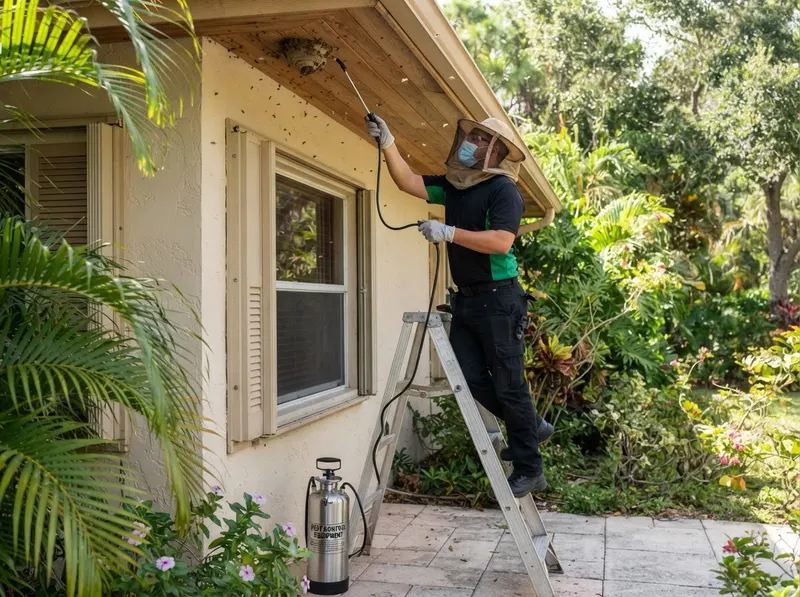
Stinging insect defense in coastal South Florida requires specialized physical intervention rather than indiscriminate chemical fogging. In historic districts like El Cid, Flamingo Park, and Grandview Heights, mature barrel-tile roofs, open soffits, and lath-and-plaster construction offer void spaces where European honeybees, Africanized hybrids, and red paper wasps establish entrenched colonies. A standard chemical aerosol spray only agitates stinging insects, driving them through electrical switch plates and interior recessed fixtures into living quarters. A clinical removal strategy prioritizes mechanical containment, physical colony extraction, and structural exclusion. Technicians identify void access points using localized thermal scans to determine brood margins behind fascia boards, brick ties, and stucco bands before executing surgical extraction.
Cavity nesting presents a secondary architectural hazard that simple extermination ignores. When a honeybee colony of 20,000 to 40,000 workers is neutralized without physical comb extraction, residual honey, wax, and dead brood ferment in the high sub-tropical humidity of West Palm Beach. This decaying biomass melts inside wall assemblies, staining drywall, rotting wood framing, and drawing secondary pests such as ghost ants, roaches, and carpet beetles. For properties in Northwood Village and SoSo (South of Southern), where afternoon rainstorms frequently raise structural moisture, unextracted combs rapidly produce secondary structural rot. Professional treatment requires complete physical extraction of the wax comb, mechanical scraping of structural framing, sanitization with botanical antimicrobial agents, and complete physical void-packing before final exterior sealing.
Decision guidance dictates treatment method based strictly on nesting architecture and insect biology. Aerial paper wasp and mud dauber nests suspended from patio ceilings or Spanish tile gutters require localized mechanical stripping and high-grade silicone sealant along open overhangs. Structural yellowjacket nests or void-established honeybees require an invasive cut-out process, accessing the pocket through exterior siding or interior drywall, followed by backing materials and insect-mesh installation. In golf-adjacent communities like Ibis Golf and Country Club or master-planned subdivisions like Villages of Palm Beach Lakes and Riverwalk, irrigation systems and dense decorative shrubbery routinely attract swarms seeking water sources; establishing dry perimeter exclusion barriers prevents scout bees from selecting attic vents or irrigation boxes as viable brood locations.
Every job gets a firm, written price after a free on-site visit.
Tell us about your bee and wasp removal job in West Palm Beach and we'll send a clear, written quote, usually the same day.
 Iron Gate Pest Control