Rodent exclusion and abatement addresses the architectural vulnerabilities that allow rodents to bypass external building envelopes. In Palm Beach County, coastal humidity and heavy tree canopies create optimal…
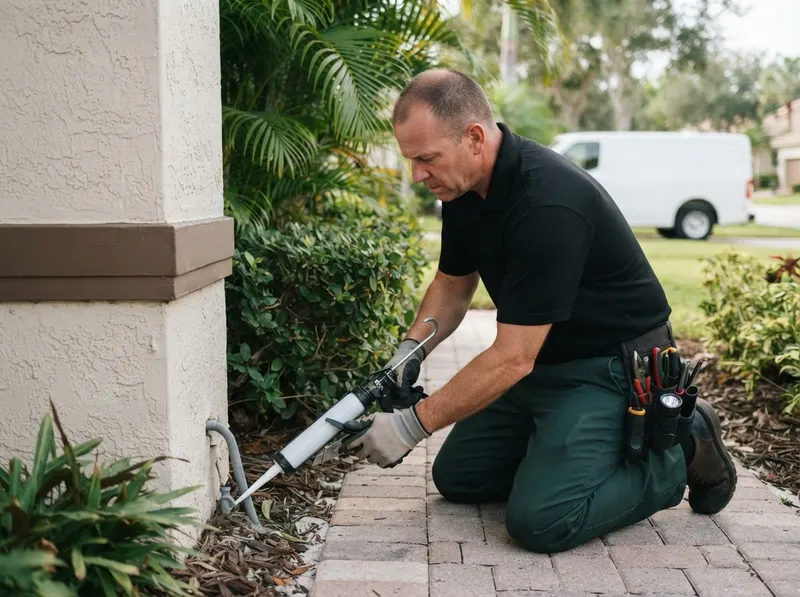
Rodent exclusion and abatement addresses the architectural vulnerabilities that allow rodents to bypass external building envelopes. In Palm Beach County, coastal humidity and heavy tree canopies create optimal habitats for roof rats, which exploit gaps as narrow as 0.5 inches in barrel tile roofs, soffit vents, and plumbing chases. Rather than relying on interior rodenticides that contaminate indoor air or result in decomposing carcasses inside wall cavities, permanent abatement relies on physical perimeter defenses. Metal flashing, steel wool packing, and quarter-inch galvanized hardware cloth block structural voids around AC line sets, fascias, and foundation vents, restoring home safety without airborne chemicals.
Properties in historic districts such as El Cid, Flamingo Park, and Grandview Heights frequently present continuous lath-and-plaster crawlspaces, decorative roof brackets, and aging clay roof tiles that require specialized masonry-compatible exclusion materials. Conversely, newer single-family properties in Ibis Golf and Country Club, Riverwalk, and the Villages of Palm Beach Lakes typically experience rodent intrusions at roof returns, vinyl soffit transitions, and pool cage tie-ins adjacent to surface water channels. Dense residential layouts across SoSo (South of Southern) and Northwood Village face high rodent pressure from surrounding mature citrus and palm canopies, necessitating roof-line tree clearing clearance along with perimeter hardware installation.
Selecting permanent physical exclusion over recurrent toxic baiting creates distinct structural advantages. Chemical bait stations placed without physical repairs temporarily depress outdoor numbers while leaving attic access pathways open, requiring indefinite chemical replenishment. Physical exclusion permanently shuts the envelope; the trade-off is higher initial labor for mechanical barrier retrofitting compared to low-cost chemical dispersion. Step 1 involves identifying all daylight breaches larger than a dime along the exterior. Step 2 requires sealing all crawlspaces, vents, and roof junctures with chew-proof barriers. Step 3 utilizes interior mechanical snap traps to systematically remove remaining rodents inside the perimeter without poisons, followed by thermal scanning to verify total population clearing.
Every job gets a firm, written price after a free on-site visit.
Tell us about your rodent exclusion and abatement job in West Palm Beach and we'll send a clear, written quote, usually the same day.
 Iron Gate Pest Control