Subterranean termite colonies in Palm Beach County thrive in hyper-saturated sandy soil, entering buildings through foundation cracks as narrow as 1/32 of an inch. Unlike drywood termites that live entirely inside dry…
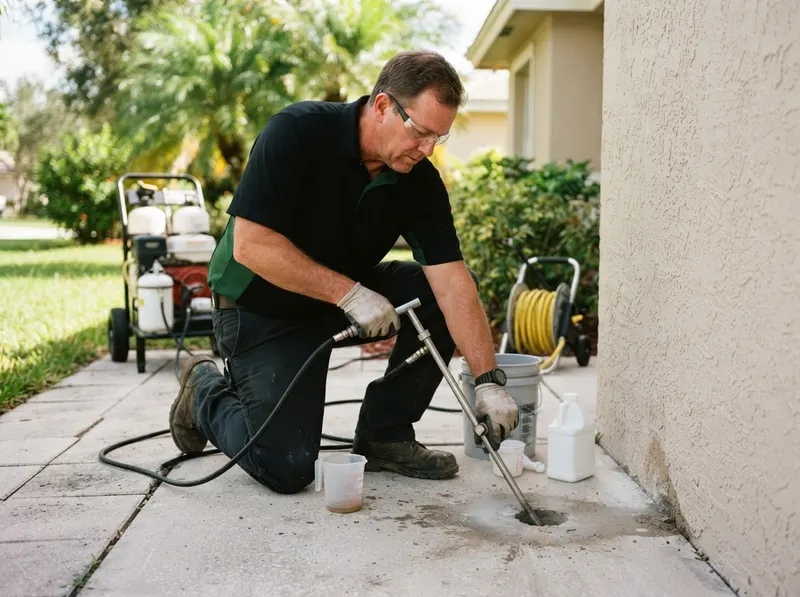
Subterranean termite colonies in Palm Beach County thrive in hyper-saturated sandy soil, entering buildings through foundation cracks as narrow as 1/32 of an inch. Unlike drywood termites that live entirely inside dry timber and require tent fumigation, subterranean species nest underground and build moisture-retaining mud tubes over concrete stems to reach structural floor joists. Traditional baseboard aerosol sprays fail to eliminate these infestations because the true colony hub remains sheltered 4 to 18 inches below the surface. Installing a continuous, non-repellent liquid barrier around the concrete perimeter establishes an undetectable zone that foraging workers pass through, transferring active termiticides back to the central subterranean nest.
Historic homes with raised foundations in Flamingo Park, Grandview Heights, and El Cid feature dense pine framing that demands direct stem-wall trenching and crawlspace soil flooding. Modern concrete slab properties in Ibis Golf and Country Club, Villages of Palm Beach Lakes, and Riverwalk require targeted expansion-joint treatments and perimeter soil injections around exterior stucco footings. In coastal corridors such as Northwood Village and SoSo (South of Southern), where the water table sits near sea level, non-leaching formulations prevent termiticide displacement during heavy sub-tropical rain cycles, keeping indoor air completely clear of volatile chemical off-gassing.
Homeowners choose targeted subterranean perimeter trenching over full-structure fumigation when termite activity stems strictly from soil contact rather than dry wood colonies. The functional trade-off centers on application scope: structural tenting treats drywood infestations inside roofs but offers 0% residual protection against soil-based subterranean termites. Conversely, external liquid perimeter treatments protect sub-slab footings for 5 to 8 years without forcing residents to vacate their homes or pack away food supplies, though it does not resolve drywood termites nesting high in attic rafters. Technicians measure foundation linear footage directly on-site to verify that utility entrances, concrete patios, and exterior air conditioning pads receive complete, uninterrupted defense bands.
Every job gets a firm, written price after a free on-site visit.
Tell us about your subterranean termite treatment job in West Palm Beach and we'll send a clear, written quote, usually the same day.
 Iron Gate Pest Control