Ghost ants measure approximately 1.3 to 1.5 millimeters with translucent abdomens, while white-footed ants reach roughly 2.5 to 3 millimeters with dark bodies and pale tarsal segments. In South Florida coastal…
Ghost ants measure approximately 1.3 to 1.5 millimeters with translucent abdomens, while white-footed ants reach roughly 2.5 to 3 millimeters with dark bodies and pale tarsal segments. In South Florida coastal environments, both species establish polygyne colonies containing hundreds of fertile queens across multiple satellite nests. Standard over-the-counter contact sprays split these colonies, a defensive process termed budding, which causes single infestations to fragment into 4 to 8 distinct sub-colonies behind baseboards, plumbing penetrations, and electrical faceplates. In historic neighborhoods like Flamingo Park, Grandview Heights, and El Cid, lath-and-plaster wall cavities and damp pine framing provide microclimates that sustain uninterrupted indoor trailing, especially during sustained humidity spikes above 75 percent.
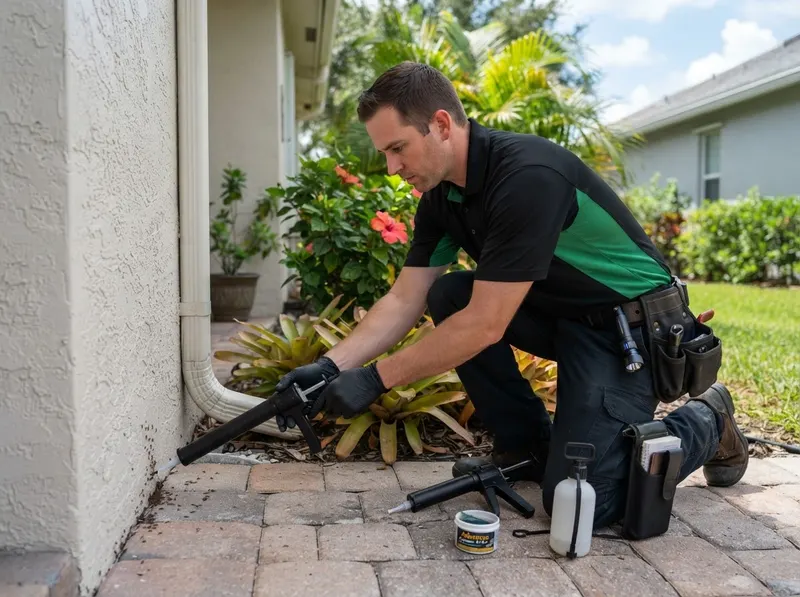
Controlling these species requires an exterior-focused physical and behavioral strategy. Technicians isolate structural foraging paths running along exterior utility conduits, soffit returns, and palm fronds making physical contact with exterior walls. Instead of broadcasting synthetic chemicals inside food preparation spaces, exterior mitigation pairs targeted sweet and protein non-repellent transfer matrices with architectural exclusion. Applying low-toxicity borate or micro-gel baits along outdoor foundation joints allows trailing workers to share lethal doses across satellite queens through trophallaxis without alerting the colony. In newer developments such as Riverwalk and the gated properties within Ibis Golf and Country Club, irrigation runoff and dense mulch beds adjacent to foundation stucco create ideal nesting substrate, requiring granular moisture adjustments and gap-sealing around exterior hose bibbs and expansion joints.
Decision guidance depends on nest location and colony density. If ant activity remains restricted to isolated exterior landscaping or tree canopies, pruning vegetation 24 inches clear of exterior masonry combined with granular bait stations resolves the forage pattern. If trailing workers actively penetrate window casings in Downtown West Palm Beach condos, Northwood Village bungalows, or modern builds in the Villages of Palm Beach Lakes, structural exclusion becomes necessary. Polyurethane sealants must close the hairline 1-millimeter voids behind siding and window trim. The practical trade-off centers on intervention speed versus permanent elimination: contact pyrethroid sprays yield immediate dead workers on kitchen countertops but induce budding within 72 hours, whereas non-repellent perimeter transfers require 7 to 14 days to fully extinguish multi-queen reproductive cycles while preserving indoor air quality.
Every job gets a firm, written price after a free on-site visit.
Tell us about your ghost ant and white-footed ant control job in West Palm Beach and we'll send a clear, written quote, usually the same day.
 Iron Gate Pest Control